Springe zum Inhalt

Previous project

European Criminal Law for Defence Lawyers

The training of defence lawyers with special regard to European criminal law has gained more and more importance over the years. This is not only due to the rising number of measures regarding European instruments of mutual recognition and cooperation in criminal matters like the EAW and the EIO, but also to those instruments being applied in a common manner, which, in turn, is resulting in rising numbers of cases in which such instruments are part of the proceedings.

Hence, this project sets out:

  • To train ca. 500 defence lawyers from all over the EU by organising 15 interactive and practical legal training activities on EU criminal law matters
  • To raise awareness of European criminal law amongst defence lawyers in the EU, leading to better application of EU criminal law and a better understanding of national differences
  • To enhance mutual trust through providing networking opportunities for defence lawyers
  • To provide a platform for discussion on the need for further EU measures in the area of criminal law.

The project comprises six face-to-face seminars across the EU providing training on different issues such as procedural rights, current developments in criminal proceedings (e.g. digitalisation), and milestones of European criminal justice such as the EAW, alongside six afternoon webinars providing an overview on how to combat key crimes in the EU. Two further events, a face-to-face seminar on the case law of the CJEU in criminal matters and its preliminary ruling procedure, as well as a seminar on the difference in the application of the right to legal privilege in criminal matters in the EU Member States, will complete the training offer. In addition, selected recordings of the webinars as well as an introductory e-learning course will be made publicly available.

As a result, this project will contribute to raising awareness on European criminal law amongst defence lawyers in the EU and allow for a better application of EU criminal law. A better understanding of national differences, enhanced mutual trust, and higher standards for procedural rights in the EU will be only some of the effects. Finally, the project will give various networking opportunities providing a platform for discussion on the need for further EU measures in the area of criminal law and for meeting colleagues from other EU Member States, which will foster mutual understanding and hence the creation of a European judicial culture.

The project is set to run for 24 months starting on 1 January 2024, with a total of 15 interactive, practice-oriented activities implemented within this time-frame.

Brochure
Brochure

In order to allow as many interested defence lawyers as possible to benefit from this project, a wide range of activities is offered – from an e-Learning course and recordings to webinars, face-to-face seminars, and a conference bringing together different legal professions.

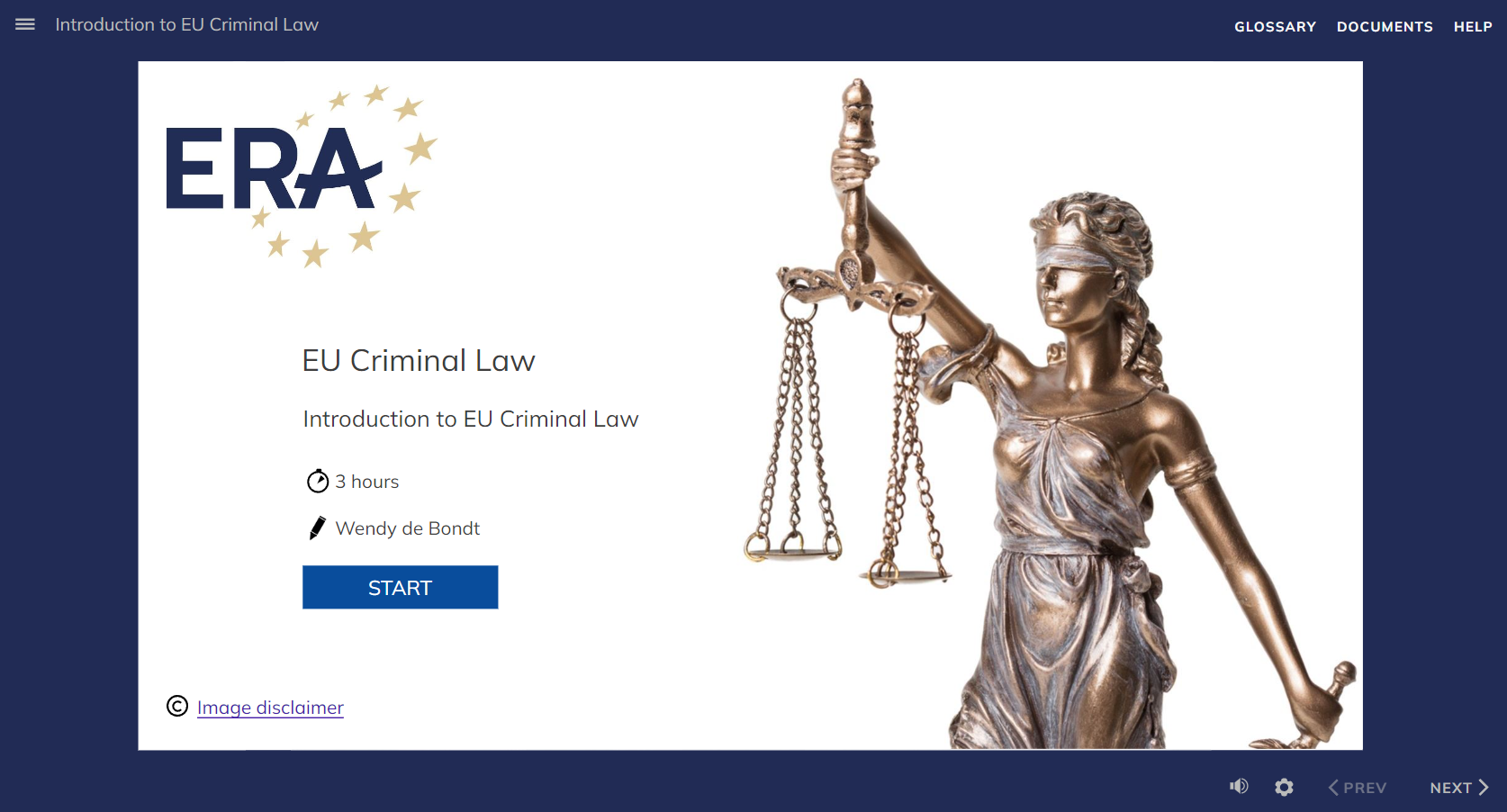
This introductory, three-hour e-learning course will provide a basis of understanding for everyone interested in European criminal law from the defence perspective. It will provide a guide through the fundamental characteristics of EU criminal law and show that EU criminal law does not mirror national criminal law systems. Instead, EU criminal law is a body of legal instruments and supporting EU-level actors influencing and facilitating the work of national criminal justice actors.
The modules of the course will delve into both the mechanism of approximation (of procedural and substantive criminal law) and the principles of mutual recognition. The role and functioning of Europol, Eurojust and the European Public Prosecutor’s Office are also clarified. Key topics of the course will include procedural criminal law, the presumption of innocence and right to a lawyer; substantive criminal law, especially looking at offences relating to trafficking in human beings; mutual recognition of sentences, especially looking at cross-border execution and criminal records; and judicial cooperation, including an introduction to the European Arrest Warrant and European Investigation Order.

The e-Learning course will be publicly available on the project website.

The main aim of the activities in this project is to bring together defence lawyers from all over the EU in face-to-face training events covering current issues in European criminal justice relevant for the defence. By means of presentations and workshops, the participants at these six face-to-face seminars will learn about the milestones of EU criminal justice, receive an overview of the six EU Directives on Procedural Rights with a focus on fair trial rights, bring together human rights and criminal justice by looking at the scope and application of the EU Charter of Fundamental Rights, get perspective on the role of lawyers in protecting and promoting the rule of law and mutual trust, and deal with current developments such as digitalisation in criminal proceedings (e-evidence, video conferencing in criminal proceedings). Every face-to-face seminar will first and foremost offer a platform for exchange of experience and best practice to network and get to know each other.

The seminars will have a duration of 1.5 days and be held in English. They will take place in Barcelona, Budapest, Lisbon, Riga, Vilnius, and Zagreb.

This series of six 3-hour webinars, ERA offers practicing defence lawyers an easy access solution to learn about the following current issues in European criminal justice:

  1. cross-border procedures and the EAW
  2. taking evidence in cross-border procedures and the EIO
  3. representing foreign citizens in criminal procedures
  4. anti-money laundering in the EU
  5. freezing and confiscation in the EU
  6. computer crimes
Before the webinars, participants will receive background materials with factsheets, legal sources, relevant cases, and a vocabulary list. The webinars will be held in English.

This seminar will give interested legal practitioners the opportunity to discuss and debate the question of the protection of legal privilege in criminal proceedings in the EU. In the absence of common EU standards, legal privilege is applied differently from EU Member State to EU Member State, resulting in different standards of criminal defence. Hence, this seminar will seek the opportunity to present and debate the effects of such differences on both the defence and the judiciary and discuss the need for common standards.

The 1.5-day face-to-face seminar will be offered to defence lawyers together with judges and prosecutors. The language of the conference will be English.

The increasing importance of the Court of Justice of the EU and its case law in the field of European criminal law is the focus of this 2.5 day seminar. The following topics will be addressed: preliminary reference procedure and litigation before the CJEU; case law of the CJEU; and the practitioners will also develop skills to draft a motion to the national court for a preliminary reference order during small-group workshops. The seminar will include a visit to the Court of Justice and attending a hearing.

The seminar will take place in Trier at ERA’s premises due to the proximity to the CJEU in Luxembourg. The language of the seminar will be English.

Selected recordings from key lectures and presentations at the events will be made publicly available on the project website.

The full programmes and the documentation will be uploaded when available.

This series of face-to-face events will focus on specific aspects of cross-border criminal law matters. They will be held in English and will be hosted by the consortium in various EU Member States. Each event will have a duration of 1.5 days. The final seminar on the role of the CJEU for defence lawyers will have a duration of 2.5 days and include a visit to the Court in Luxembourg. All events will be held in English.

In parallel to the organisation of the face-to-face events, a series of webinars will be implemented focusing on key issues in European criminal justice for defence lawyers. The 3-hour webinar format will allow for easy access for anyone interested throughout the EU. The presentations of the webinars will be recorded and made publicly available on the project website.

e-Learning course on European criminal law for defence lawyers
e-Presentation Elena Lazar
Dr Elena Lazár: Council of Europe cybercrime standards and EU standards on information systems, fraud and non-cash payments
e-Presentation Elena Lazar
Dr Elena Lazár: EU standards to combat the sexual exploitation of children online, child pornography and violence against women and domestic violence
ePresentation Ciprian Băban: Online investigations and the challenges of dealing with electronic evidence in criminal proceedings and in court
Ciprian Băban: Online investigations and the challenges of dealing with electronic evidence in criminal proceedings and in court
e-Presentation Michaël Fernandez-Bertier: Current and future applicable legislative framework
Michaël Fernandez-Bertier: Current and future applicable legislative framework
Rita Simões: Means and methods to recover and confiscate assets
e-Presentation Michaël Fernandez-Bertier: Challenges in an evolving regulatory framework
Michaël Fernandez-Bertier: Challenges in an evolving regulatory framework
e-Presentation Michaël Fernandez-Bertier: Currently applicable EU AML/CFT Directives
Michaël Fernandez-Bertier: e-Presentation Michaël Fernandez-Bertier: Currently applicable EU AML/CFT Directives
e-Presentation Michaël Fernandez-Bertier: The new AML/CFT package
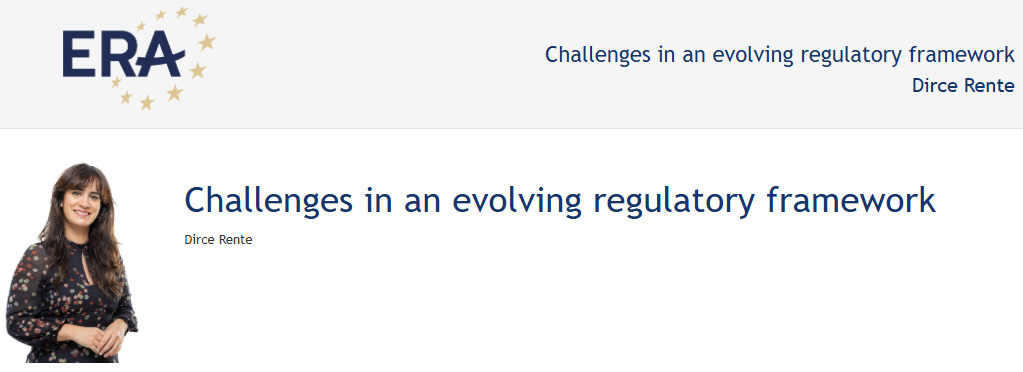
e-Presentation Dirce Rente: Challenges in an evolving regulatory framework
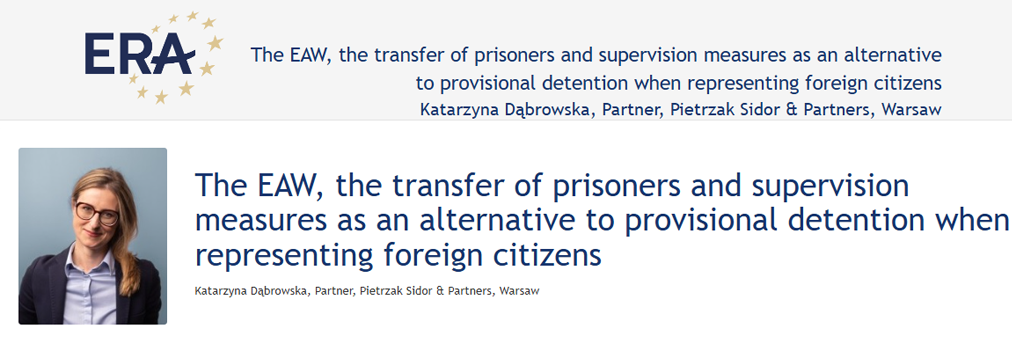
ePresentation Katarzyna Dąbrowska: The EAW, the transfer of prisoners & supervision measures as an alternative to provisional detention when representing foreign citizens
Katarzyna Dąbrowska: The EAW, the transfer of prisoners & supervision measures as an alternative to provisional detention when representing foreign citizens
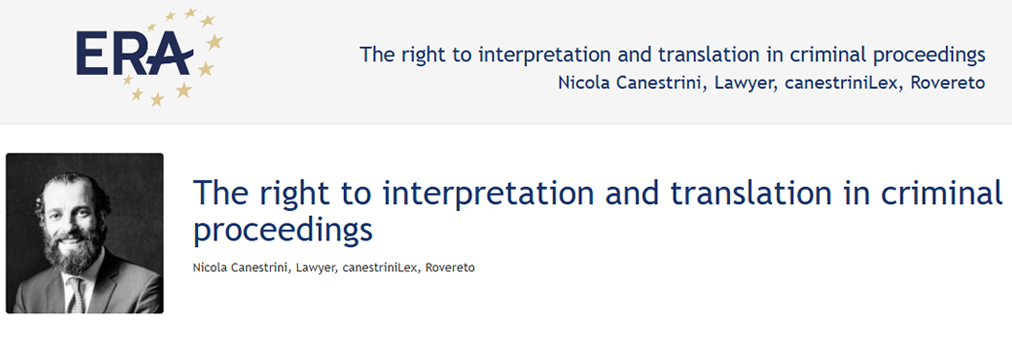
ePresentation Nicola Canestrini: The right to interpretation and translation in criminal proceedings
Nicola Canestrini: The right to interpretation and translation in criminal proceedings
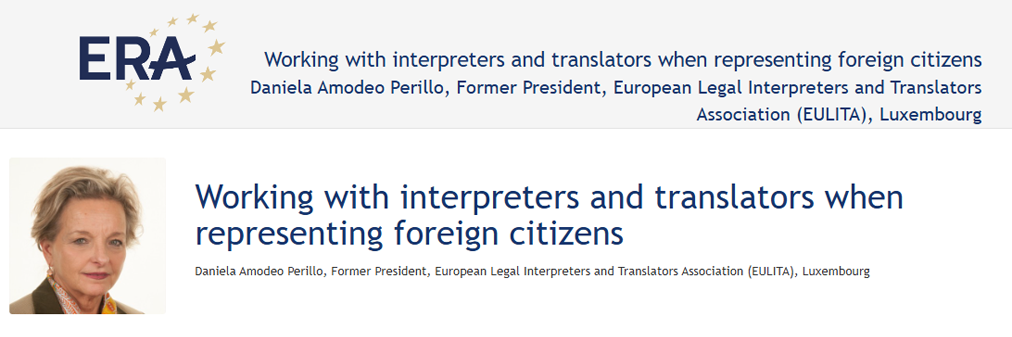
ePresentation Daniela Amodeo Perillo: Working with interpreters and translators when representing foreign citizens
Daniela Amodeo Perillo: Working with interpreters and translators when representing foreign citizens
ePresentation Noémie Coutrot-Cieslinski: Taking Evidence in Cross-Border Procedures: the EIO and how it functions as an instrument of mutual recognition & assistance
Noémie Coutrot-Cieslinski: Taking Evidence in Cross-Border Procedures: the EIO and how it functions as an instrument of mutual recognition & assistance
Vladimir Hrle: Videoconferencing in cross-border criminal cases
ePresentation Adrian Șandru: Cross-Border Access to Electronic Evidence in Criminal Matters
Adrian Șandru: Cross-Border Access to Electronic Evidence in Criminal Matters
ePresentation Silvia Allegrezza: The EAW and how it functions as an instrument of mutual recognition
Silvia Allegrezza: The EAW and how it functions as an instrument of mutual recognition
ePresentation Katarzyna Dąbrowska: A lawyer’s role in EAW proceedings
Katarzyna Dąbrowska: A lawyer’s role in EAW proceedings
EN Co-funded by the EU